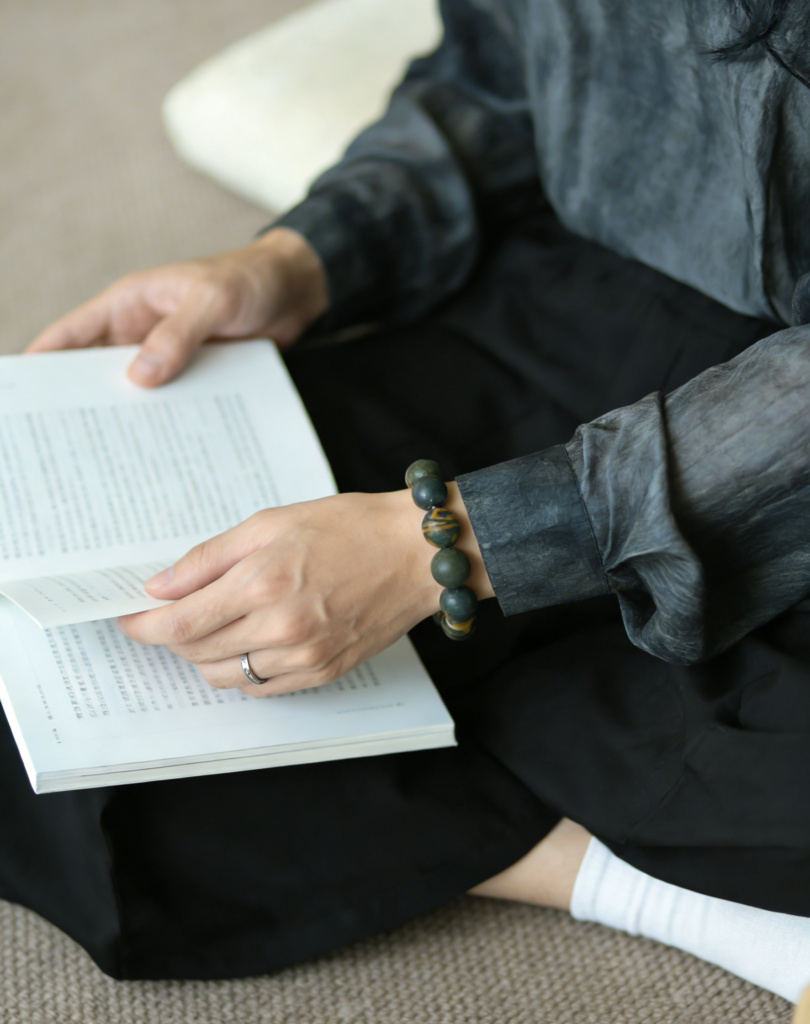
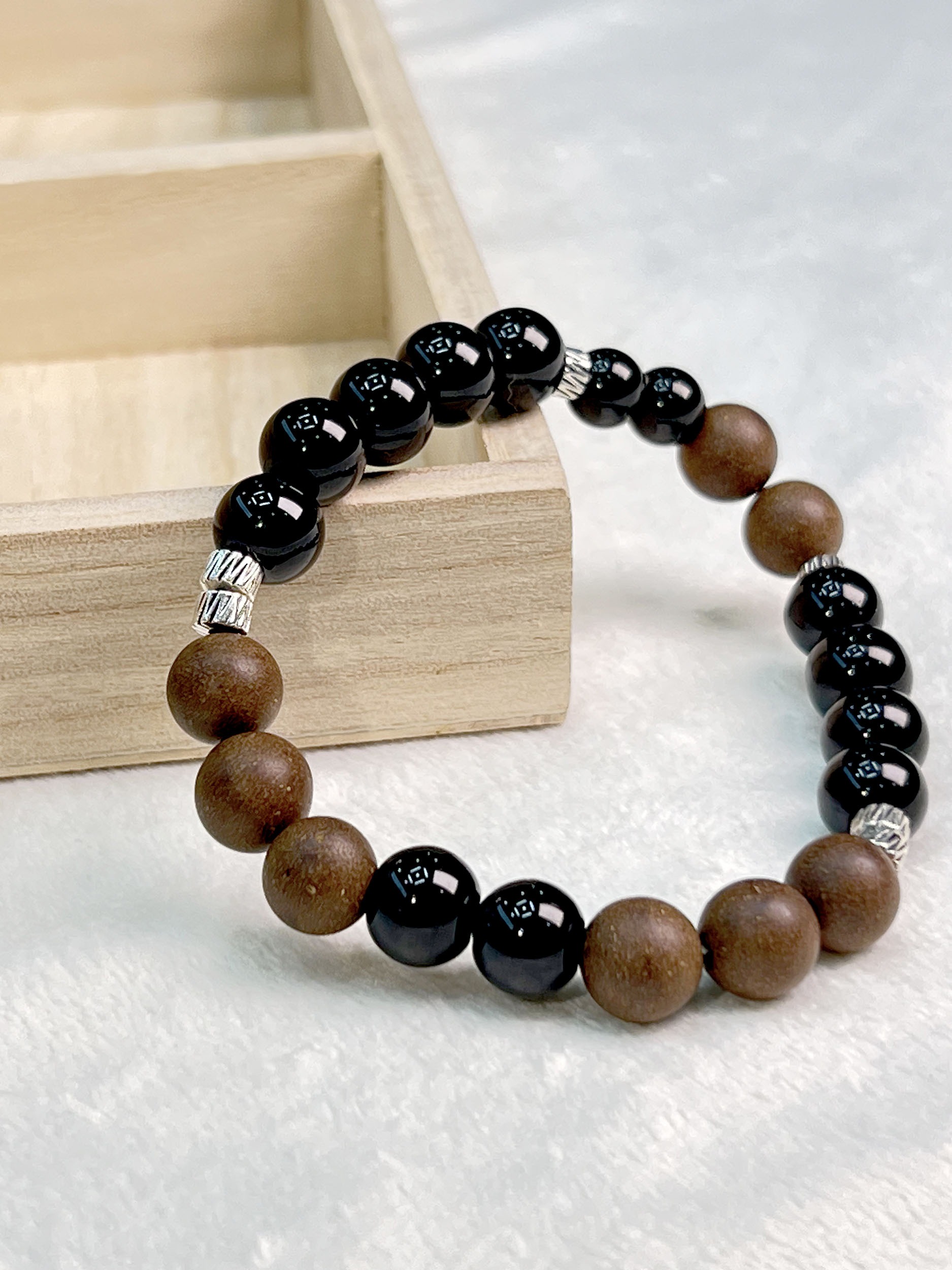
The agarwood bead bracelet on my wrist has been my “old buddy” for nearly two years — every time I bow my head and smell its light woody fragrance, I can calm down instantly. Many friends ask me, as someone obsessed with Eastern wellness, why do you always wear this string of beads? In fact, it’s not just a beautiful accessory; it hides thousands of years of stories. Today, as someone who knows the ins and outs, I’ll share the history of Chinese medicine bead bracelets with you, from ancient aromatherapy pendants to modern wellness trends, and also talk about the small questions that Western friends care most about.
The Origin: Ancient Aromatherapy Pendants — The Ancestor of Chinese Medicine Bead Bracelets
After being in touch with Chinese medicine bead bracelets for a long time, I found their origin very interesting. It can be traced back to the pre-Qin period. At that time, there was no such term as “bracelet”. What ancient people wore was “aromatherapy pendants” — simply put, stringing vanilla and hanging it on the body, which was both an ornament and a small wellness item. When I was a child, I read “Li Sao”, and the line “I wear Jiangli and Pizhi, and thread autumn orchids as pendants” tells that Qu Yuan strung vanilla like Jiangli and Zhicao as accessories. It wasn’t for showing off; he really knew about wellness.
By the Tang and Song dynasties, aromatherapy pendants had upgraded. Instead of simply stringing vanilla, people ground Chinese medicinal materials into powder and added some adhesives to make “incense beads” and “ingot medicine”. I have seen old incense beads in the collection market before; they feel very warm and have a light medicinal fragrance, unlike some modern bracelets that have a strong artificial fragrance. A friend who works with Chinese medicine told me that the ingot medicine at that time was very practical — it could relieve summer heat, remove moisture, and even be taken directly in emergencies, equivalent to the “portable wellness bag” of ancient people. This is actually the embryonic form of modern Chinese medicine bead bracelets.
The Ming and Qing dynasties were the most popular period for aromatherapy pendants. From nobles in the imperial palace to ordinary people on the streets, almost everyone wore incense beads and sachets. When I went to Shaanxi History Museum, I specially looked at Yang Guifei’s silver sachet. It was exquisitely made, and the spices inside could keep the fragrance for a long time, which was both beautiful and good for wellness. Craftsmen at that time were also very good at choosing materials; high-quality materials such as agarwood, sandalwood, and soapnut began to be used in incense beads, and the craftsmanship became more and more refined, laying the foundation for today’s Chinese medicine bead bracelets.
Evolution: From “Small Healing Tools” to “Daily Wellness Accessories”
Over the years, the appearance of Chinese medicine bead bracelets has changed, but the core wellness principle remains the same — using the natural fragrance of Chinese medicinal materials to regulate the body and mind, which is what TCM calls “aromatherapy”. After wearing it for so long, my biggest feeling is that the agarwood bracelet can help me relieve stress. Especially when working overtime and staying up late, smelling that light fragrance reduces a lot of irritability. A friend who does TCM popular science in Chengdu told me that this is the effect of aromatherapy — mild and non-irritating, a very practical auxiliary wellness method.
Ancient people wore aromatherapy pendants mainly to prevent epidemics, repel mosquitoes, and treat diseases. After all, living conditions were poor at that time, with frequent plagues and mosquitoes. Wearing an aromatherapy pendant containing mugwort and calamus could reduce the chance of getting sick. But now it’s different; our living conditions are better. More people wear Chinese medicine bead bracelets to relieve stress, improve sleep, and regard it as a sense of life ritual. Many young people around me don’t like heavy wellness methods; they like this small item that can be worn on the wrist, doesn’t take up space, and can smell the fragrance at any time. That’s why it has changed from “medicinal use” to “wellness accessory”.
In terms of craftsmanship, today’s Chinese medicine bead bracelets are more exquisite than those in ancient times. I have been to several handcraft studios in Dali. They still use the ancient “nine steaming and nine drying” method, but add modern designs. The bracelets made not only retain the fragrance of Chinese medicinal materials, but also look good and versatile, so young people are willing to wear them. Unlike the old incense beads, which were mostly round and single in style, today’s bracelets have various shapes and can be matched according to personal preferences — that’s the key to their popularity.
My Thoughts: Wellness Logic Recognized by Both East and West
Many Western friends ask me, is the wellness effect of Chinese medicine bead bracelets really reliable? Actually, I want to say that its logic is the same as Western aromatherapy — both use plant fragrance to affect mood and the body. I have checked some materials; TCM says that aroma can “penetrate the body”, enter the body through the nose and skin, and regulate qi and blood. Western aromatherapy also holds that plant aroma can act on the brain to relieve anxiety. To put it simply, both the East and the West recognize the principle that “natural fragrance can promote wellness”.
But I have to be honest about one thing: Chinese medicine bead bracelets are for auxiliary wellness, not for treating diseases. I know a TCM friend from Wuhan University. He told me that the wellness value of materials like agarwood and soapnut is real — for example, agarwood can soothe the nerves, and soapnut has antibacterial properties. But the release of active ingredients is very small; it’s unrealistic to rely on it to treat diseases. This is what I always emphasize to people around me: wearing it is for daily conditioning, not a substitute for medicine. This is a consistent wellness concept in both the East and the West.
For Western friends, the appeal of Chinese medicine bead bracelets is not only wellness, but also the Eastern culture behind them. Many foreign friends are curious about its materials and stories when they see my bracelet for the first time. Through this small string of beads, they can slowly understand Eastern wellness wisdom and break the stereotype that “TCM is obscure”. I think this is very good — a string of beads can not only promote wellness, but also pass on culture. That’s its charm.
Practical Tips: How Do Western Friends Choose and Wear Them?
After dealing with Chinese medicine bead bracelets for so long, I have summarized 3 practical tips. Whether you are from the East or the West, you won’t make mistakes if you follow them. They also fit the questions everyone often searches for on Google, such as how to choose and what to pay attention to when wearing them:
- Prioritize materials that are homologous for medicine and food, such as agarwood, sandalwood, mugwort, and dried tangerine peel. The one I wear is agarwood; it’s highly safe, not easy to cause allergies, and suitable for long-term wear. Try not to choose toxic materials like cinnabar and realgar. Although they look good, they can only be worn for a short time and must be used under professional guidance. Don’t buy them casually.
- Judge the quality by aroma — this is my most commonly used method. High-quality Chinese medicine bead bracelets have a light and natural fragrance that can be emitted slowly without being pungent. If you smell a strong fragrance as soon as you get it, it’s probably added with chemical flavors, which is not good for the body when worn for a long time. Every time I choose a bracelet, I smell the aroma first. The fragrance I like is usually more suitable for my constitution.
- Choose according to your own needs. If you are under high pressure and can’t sleep well, choose agarwood or sandalwood — I rely on it to soothe my nerves when working overtime. If you are prone to allergies and want antibacterial effects, soapnut is a good choice. Young people who want to regulate their mood can try blended incense beads mixed with mugwort and roses; they look good and have a fresh fragrance.
Finally, I’ll share a few small precautions for wearing them, which I summarized from my own mistakes: Don’t get the bracelet wet or exposed to the sun. Agarwood is afraid of moisture, and cinnabar is afraid of sun exposure. I once had a cinnabar bracelet cracked by the sun, which was very a pity. Don’t wear it with metal accessories; it’s easy to scratch and may cause chemical reactions. Pregnant women and people with sensitive skin must choose carefully and avoid ingredients like musk and realgar.
Conclusion: The Little Beauty on the Wrist Hides Thousands of Years of Wisdom
From ancient aromatherapy pendants to the agarwood bracelet on my wrist today, Chinese medicine bead bracelets have gone through thousands of years. What remains unchanged is their original intention of wellness, and what has changed is that they are more in line with modern people’s aesthetics and needs. For me, it’s not just a string of beads, but an attitude towards life — in a fast-paced life, having a small item that allows you to calm down and feel the natural fragrance is enough.
Whether you like Eastern culture or simply want to find a mild wellness method, Chinese medicine bead bracelets are worth a try. It strings together the wellness wisdom of tradition and modernity, East and West. Worn on the wrist, it is both an accessory and a companion. I hope this personal sharing can help you understand Chinese medicine bead bracelets better and find your own “little wellness beauty”.